

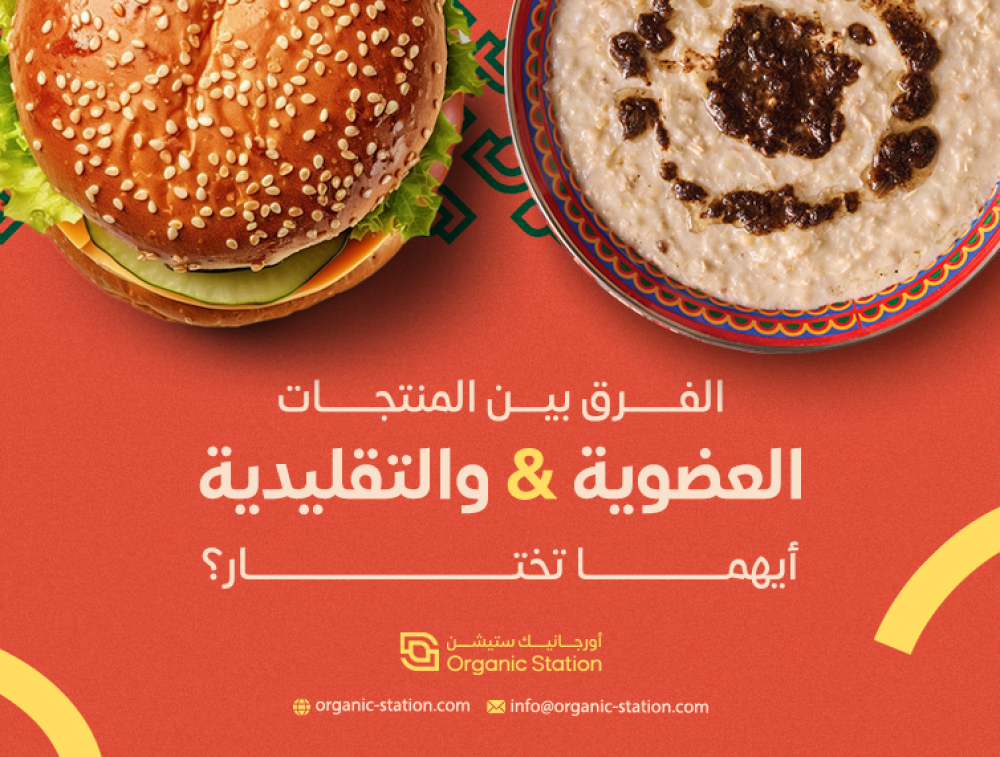
When shopping, we often find ourselves faced with two choices: traditional products that we are used to, and organic products that are promoted as a healthy and natural option.
But what is the real difference between them? And does the organic one deserve all this attention?
Let's explore that in detail.
1. Cultivation and Production Methods
🔹 Organic products: These rely on natural farming methods that reject the use of chemical pesticides and artificial fertilizers. Plants are grown in a natural environment without industrial intervention, thus preserving soil and water and promoting ecological balance.
🔹 Traditional products: These are grown using intensive techniques that rely on pesticides and chemical fertilizers to increase production, but they may leave harmful residues that affect food quality and consumer health.
2. Livestock nutrition and animal production standards
🔹 Organic livestock: They are fed 100% natural feed free of artificial substances and are not injected with antibiotics or growth hormones, making their meat and dairy products more natural and safer.
🔹 Traditional livestock: They are often fed genetically modified feed or feed containing artificial additives, and may be injected with hormones to increase production quickly, which may affect the quality of meat and milk.
3. Artificial additives and flavorings
🔹 Organic foods: Completely free from preservatives, artificial colors, enhanced flavors, and chemical sweeteners. This makes them safer for the body, especially for children and people with food allergies.
🔹 Traditional foods: contain a wide range of chemical additives to improve taste, color, and shelf life, which may have negative health effects with continuous consumption.
4. Impact on health and the body
Consuming organic products reduces exposure to chemicals and pesticides, which supports the immune system and reduces the risk of chronic diseases.
Traditional products, with continued exposure, may contribute to the accumulation of toxins in the body, which may lead to long-term health problems.
5. Sustainability and environmental protection
Organic farming preserves the environment, protects the soil from pollution, and supports biodiversity.
Traditional agriculture negatively impacts the ecosystem due to the intensive use of chemicals and unsustainable methods.
Which of the two options is better?
🔸 If you are looking for more natural, healthy, and chemical-free food, organic products are the perfect choice.
🔸 If you prefer products that are available at lower prices and widely available, traditional products may be a suitable option, but be sure to choose reliable sources as much as possible.
Every step towards organic and natural choices is a step towards a healthy and sustainable life.
Your choices are correct with Organic Station, shop now